
Key Takeaways
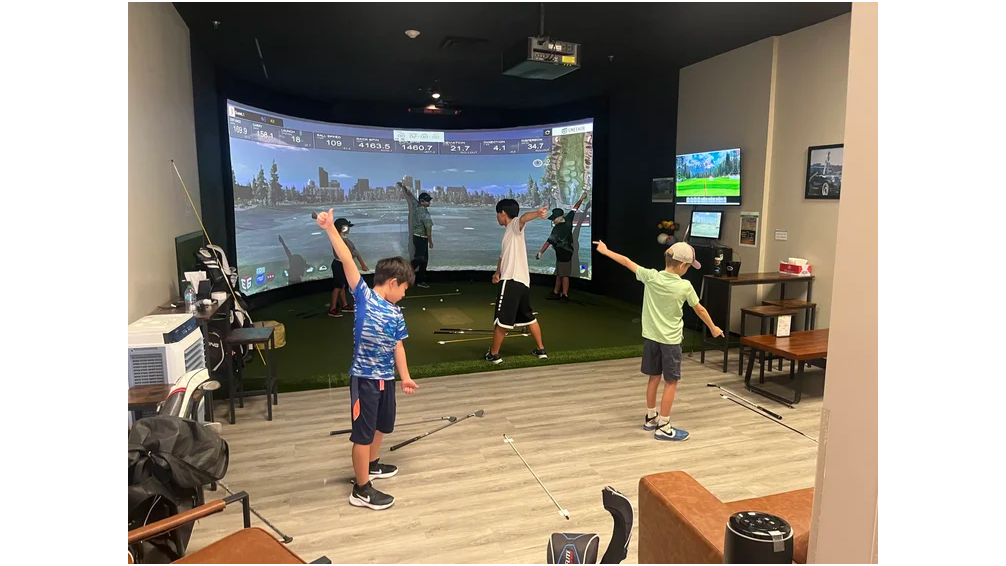
- Indoor golf lessons give junior players consistent, weather-proof practice time, which matters most in Arizona summers when temperatures can reach 115 degrees.
- Golf simulators track club speed, ball speed, launch angle, spin rate, carry distance, and shot dispersion, giving young golfers instant, measurable feedback instead of guesswork.
- Structured junior programs adjust coaching style by age, from fun-first play for 4 to 6-year-olds to data-driven training for juniors 11 and up.
- Arizona ESA funds let parents of qualified students pay for approved education services, and iSwing Indoor Golf’s Junior Programs are built to accept this funding.
Choosing between indoor and outdoor golf lessons shapes how quickly a young golfer builds real skill, especially in a state where summer temperatures can climb past 110 degrees. Parents weighing both options often find that the right answer depends less on picking a permanent side and more on understanding what each environment does best for a junior’s stage of development.
Why This Choice Matters For Young Golfers
As the experts at iSwing Golf explain, the early years of learning golf set the tone for everything that follows. A junior who practices consistently, gets clear feedback, and stays motivated tends to progress faster than one whose lessons are scattered or inconsistent. For families in Arizona, the choice between indoor and outdoor instruction directly affects how often a child actually gets to swing a club, how clearly instructors can diagnose swing issues, and how confident a young player feels stepping up to the ball.
This decision also touches practical matters like scheduling, cost, and how golf fits around schoolwork or homeschool routines. Weighing the tradeoffs honestly, rather than assuming one setting works better for every family, helps parents pick the path that keeps their junior engaged and improving.
Weather’s Hidden Cost To Progress
Arizona Heat vs. Year-Round Practice
Summer in Phoenix regularly pushes temperatures to 115 degrees, a stretch that can make outdoor practice uncomfortable or even unsafe for young players. Heat exhaustion, dehydration, and simple loss of motivation are real risks when a junior is swinging a club under direct sun for an hour or more. Indoor simulators sidestep this entirely, letting kids practice in a comfortable, climate-controlled space no matter what the thermometer says outside. A junior’s swing development doesn’t have to pause for half the year just because the weather turned brutal.
Lost Sessions, Lost Momentum
Every canceled lesson is a missed chance to build muscle memory, and golf skill depends heavily on repetition. Rain, wind, extreme heat, or a scheduling conflict caused by a sudden storm can derail outdoor practice plans, and those gaps add up fast. A junior who loses two or three weeks of practice during monsoon season or a heat wave often has to relearn fundamentals instead of building on them. Indoor environments remove that unpredictability, so a junior’s practice calendar stays intact and momentum keeps building session after session.
How Controlled Environments Speed Learning
Consistent Conditions Isolate Swing Flaws
A controlled indoor space keeps lighting, temperature, flooring, and setup identical every single time a junior steps up to practice. That consistency matters because it lets instructors isolate the actual cause of a swing problem instead of wondering whether wind or an uneven lie is throwing things off. When the only variable changing is the swing itself, corrections happen faster and stick longer.
Real-Time Data From Simulators
Modern golf simulators track club speed, ball speed, launch angle, spin rate, carry distance, and shot dispersion the instant a junior makes contact. Instead of guessing why a shot sliced or came up short, a young golfer can see the numbers right away and connect cause with effect. This kind of immediate, measurable feedback turns abstract coaching cues into something concrete a junior can actually understand and adjust.
Swing Analysis Cameras vs. Feel-Based Coaching
Full-body swing analysis cameras break a junior’s motion down frame by frame, showing club path, face angle, impact position, and body rotation timing with precision. Outdoor coaching leans more on feel, rhythm, and reading how a swing reacts to wind or uneven ground, which builds valuable adaptability over time. For a junior still working out basic mechanics, the visual clarity of camera-based analysis often catches recurring mistakes faster than feel-based cues alone.
Structured Programs By Age And Skill
Fun First For Young Beginners
For younger kids around ages 4 to 6, the goal stays simple: keep things fun. The focus belongs on celebrating any solid contact and working in short bursts that match a young child’s attention span, rather than chasing technical precision too early. Structured junior programs that start this way build a foundation of enjoyment before any serious mechanics get introduced, which matters more long-term than early perfection.
Building Understanding In Middle Years
Kids between roughly 7 and 10 years old start grasping cause and effect in a more meaningful way. This is the stage where light coaching becomes genuinely effective, helping juniors connect what they do with their swing to what happens to the ball. Structured lessons at this age typically introduce fundamentals in a deliberate sequence, making sure basics are solid before anything more advanced gets layered on top.
Data-Driven Growth For Older Juniors
Juniors age 11 and up are usually ready to engage with real simulator data, appreciating numbers like swing speed and ball distance in a way that accelerates their improvement. This age group benefits from programs that blend hands-on coaching with instant feedback, since they can start setting measurable goals and tracking progress over time. Full-length camps during school breaks, paired with year-round mini-camps, give these older juniors a path from basic fundamentals all the way to course management and mental game strategy.
Making Golf Accessible For Every Family
ESA Funds For Homeschool And Unschooled Golfers
Arizona’s Empowerment Scholarship Account program allows parents of qualified students to use public monies to purchase educational services from private schools, education providers, and vendors. Approved uses can include private school tuition, tutoring, curriculum, educational therapies, supplies, devices, and some online or hybrid courses. This matters for homeschooled students and kids attending schools without formal sports programs, since structured golf lessons can fall under that approved funding. Junior Programs at this facility can be funded through Arizona ESA State Funds. A Weekend Mini-Camp Series designed for beginner and intermediate golfers ages 8 to 17, along with Junior Memberships for golfers age 17 and under, gives families more than one way to put those funds toward structured instruction.
Confidence Without Outdoor Pressure
Outdoor ranges can feel intimidating for a young beginner, especially with other golfers watching nearby or a crowded bay adding pressure. Indoor settings tend to feel more private and low-stakes, letting juniors experiment with changes to their swing without worrying about an audience. Mistakes become part of the learning process rather than a public moment, and that shift alone can make a nervous young golfer far more willing to try again after a rough shot.
Indoor Training Builds Faster, Lasting Confidence
Bringing together consistent conditions, instant data, and a judgment-free setting gives junior golfers a genuine edge in how quickly they improve and how confident they feel doing it. Outdoor play still holds value once fundamentals are solid, offering real turf feel and on-course decision-making that no simulator fully replicates. For building the technical foundation and the self-assurance that comes from clear, repeatable progress, a controlled indoor environment gives young players a head start that holds up no matter the season.
For families ready to investigate structured, funding-friendly options, looking into junior golf lessons is a practical next step toward steady, year-round progress.
iSwing Indoor Golf
info@iswinggolf.com
+1-623-440-4036
42101 North 41st Drive,
Suite 124,
Phoenix
Arizona
85086
United States


