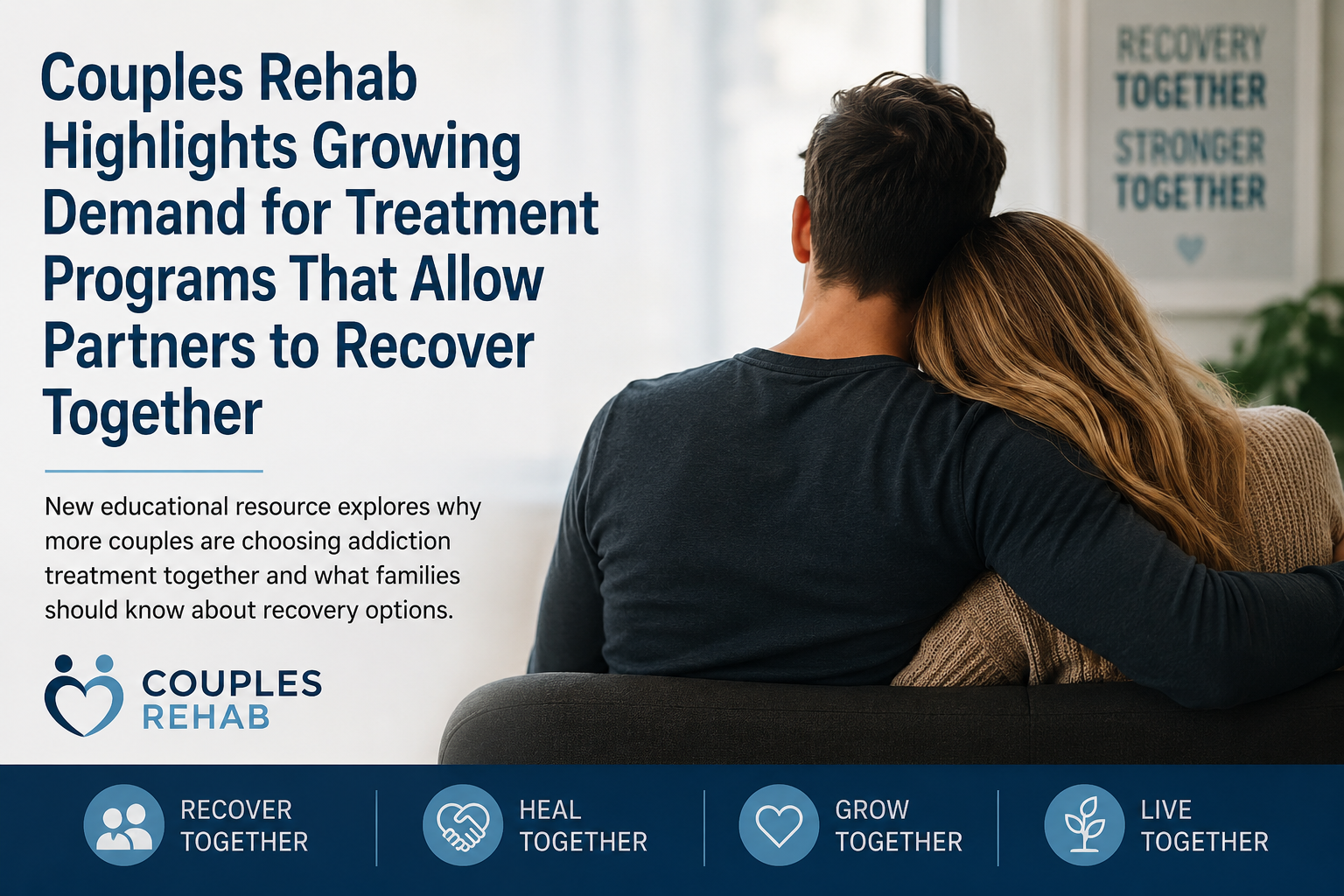
New educational resource explores why more couples are choosing addiction treatment together and what families should know about recovery options.
CA, UNITED STATES, June 23, 2026 /EINPresswire.com/ — New educational resource explores why more couples are seeking addiction treatment together, how couples rehab works, and what families should know when evaluating recovery options.
Addiction rarely affects only one person. When a partner develops a substance use disorder, the consequences extend across an entire relationship, reshaping daily routines, financial stability, and the emotional foundation that holds a household together. Behavioral health professionals have long recognized that substance use and relationships are deeply intertwined, and a growing body of attention is now focused on treatment models designed to address both at the same time.
For many couples, the strain of active addiction surfaces first in the areas that matter most. Trust erodes as secrets accumulate. Communication breaks down into conflict or silence. Finances become unpredictable, parenting responsibilities shift unevenly, and the emotional connection that once defined the relationship grows distant. Family stability, including the wellbeing of children, often hangs in the balance. These pressures help explain why interest in treatment programs built specifically for couples has continued to rise across the United States. Clinicians increasingly note that when both partners are affected by substance use, addressing only one person can leave the relationship in a fragile state that places recovery at risk.
Couples rehab refers to a category of addiction treatment in which partners pursue recovery in a coordinated way, combining clinically established therapies with relationship-focused care. Rather than treating each person in isolation, these programs acknowledge that recovery and relationship health frequently influence one another. As awareness of this connection grows, more couples are exploring whether recovering together may offer a path that supports both their sobriety and their relationship.
Why More Couples Are Seeking Treatment Together
Several factors appear to be driving the increased interest in couples addiction treatment. Public awareness of addiction as a treatable medical condition has expanded considerably, reducing some of the stigma that once kept individuals and families from seeking help. At the same time, the behavioral health field has moved toward family-centered approaches that view recovery as something supported by relationships rather than pursued in isolation.
Relationship preservation is another significant motivator. Many couples want to maintain their partnership through the recovery process rather than separate during an already difficult period. For couples who both struggle with substance use, dual recovery needs make coordinated treatment particularly relevant, since attempting to recover while a partner continues using can undermine progress for both individuals.
Greater access to specialized programs has also played a role. As more facilities develop services tailored to couples, families have more options to evaluate. Importantly, addiction frequently affects both partners even when only one person struggles directly with substance use. The partner who is not using may experience anxiety, codependency, financial hardship, or trauma related to their loved one’s addiction, and relationship-centered treatment can address these effects as part of a broader recovery plan.
Understanding How Couples Rehab Works
While programs vary, couples rehab generally follows a structured clinical process. Treatment typically begins with a comprehensive assessment of each partner, evaluating substance use history, physical health, mental health, and relationship dynamics. This assessment helps clinicians determine whether couples treatment is appropriate and what level of care each individual requires.
When detoxification is medically necessary, programs coordinate detox in a clinically supervised setting. Detox addresses the physical aspects of dependence and is followed by the therapeutic phase of treatment. Individual therapy remains a core component, giving each partner space to address personal challenges, underlying causes of substance use, and individual recovery goals.
Couples counseling is the element that distinguishes this model. Sessions focus on rebuilding communication, establishing healthy boundaries, and developing shared strategies that support sobriety for both partners. Evidence-informed behavioral therapies are commonly used to help individuals recognize patterns, manage triggers, and build coping skills. Family involvement may extend support to children or extended family members affected by addiction.
Relapse prevention planning prepares couples to navigate high-risk situations together, and aftercare planning establishes ongoing support once the structured program ends. Aftercare may include continued therapy, support group participation, and connections to community resources that help sustain long-term recovery.
Common Reasons Couples Pursue Recovery Together
Couples enter treatment for a wide range of substances. Alcohol addiction remains among the most common, in part because alcohol use is socially embedded and can escalate gradually within a relationship. Opioid addiction, including dependence on prescription pain medication and illicit opioids, is another frequent reason couples seek care. Prescription medication misuse, methamphetamine addiction, and cocaine addiction also bring couples into treatment, and the rise of fentanyl has heightened the urgency surrounding opioid-related recovery due to its potency and role in overdose risk.
Beyond the substances themselves, relationship-related motivations often shape the decision to seek help. Many couples are working to save a marriage strained by years of addiction. Others are focused on rebuilding trust that has been damaged by broken promises or financial harm. Parenting responsibilities frequently weigh heavily, as partners recognize the impact of substance use on their children. For many, the broader goals are family stability and a sustainable, long-term recovery that allows the relationship to move forward on healthier terms.
Potential Benefits of Couples-Focused Treatment
Couples-focused treatment offers several potential advantages, though outcomes always depend on individual circumstances. Shared accountability is among the most frequently cited benefits, as partners can support one another’s commitment to sobriety and recognize warning signs early. Improved communication, developed through structured counseling, often helps couples replace conflict-driven patterns with healthier ways of relating.
Relationship healing can occur as partners address the underlying issues that contributed to or resulted from addiction. Stronger support systems develop when both individuals understand recovery and share a common vocabulary for navigating it. Coordinated recovery plans help ensure that both partners are working toward compatible goals rather than at cross purposes. Some couples also experience improved treatment engagement, finding motivation in the shared commitment to recover together.
These potential benefits should be understood in context. Couples treatment is not universally appropriate, and the suitability of this approach depends on clinical evaluation and the specific dynamics of each relationship.
Important Considerations Before Entering Couples Rehab
Before pursuing couples rehab, several considerations deserve careful attention. Clinical appropriateness is paramount, as treatment professionals must determine whether joint treatment will support or complicate each partner’s recovery. Individual treatment needs vary, and in some cases one or both partners may benefit from separate or more intensive care.
Safety considerations are essential. In relationships involving abuse, coercion, or significant instability, joint treatment may not be advisable, and clinicians screen for these factors during assessment. Co-occurring disorders and mental health conditions, such as depression, anxiety, or trauma-related conditions, often accompany substance use and may require integrated treatment. Program structure also differs from facility to facility, with variations in setting, duration, and the balance of individual versus joint therapy.
Because each situation is unique, treatment recommendations vary based on individual circumstances. A thorough assessment by qualified professionals is the most reliable way to determine whether couples rehab is the right approach.
What Families Frequently Ask About Couples Rehab
Can couples attend treatment together? In many programs, yes. Couples can participate in coordinated treatment that includes shared counseling alongside individual care, provided clinical assessment supports this approach.
Can couples detox together? Detox is determined by medical need and is conducted under clinical supervision. Some programs coordinate detox for both partners, while others may stagger or separate the process based on individual health requirements.
Does insurance cover couples rehab? Coverage varies by plan and provider. Many addiction treatment services are covered under behavioral health benefits, and insurance verification can clarify what a specific plan includes.
How long does treatment last? Treatment length depends on individual needs, the level of care, and progress over time. Programs may range from a few weeks to several months, often followed by ongoing aftercare.
Is couples rehab effective? Effectiveness depends on many factors, including clinical appropriateness, individual commitment, and the quality of the program. For suitable couples, relationship-focused treatment can support both recovery and relationship health.
What happens after treatment? Aftercare planning typically connects couples with continued therapy, support groups, and community resources designed to sustain long-term recovery.
Growing Interest in Relationship-Centered Recovery
The rising interest in couples rehab reflects broader trends shaping behavioral healthcare. The field has increasingly embraced family-focused care, recognizing that recovery is strengthened when the people closest to an individual are part of the process. Integrated treatment, which addresses substance use and mental health together, has become more common, as has the expansion of dual diagnosis services for individuals managing co-occurring conditions.
Relationship recovery support and long-term recovery planning are also receiving greater emphasis, reflecting a shift away from short-term, isolated interventions toward sustained, holistic care. Within this evolving landscape, couples-focused treatment represents one component of a wider movement toward recovery models that account for the relationships and family systems surrounding each individual.
A National Educational Resource for Couples and Families
Couples Rehab serves as a national educational resource covering the topics families most often research when evaluating recovery options. Its materials address couples addiction treatment, detox options, admissions guidance, insurance information, and recovery planning resources, with the goal of helping couples and families make informed decisions.
Families seeking to understand the clinical and relational dimensions of recovery can explore information on couples addiction treatment, which outlines how relationship-centered care is structured. For those weighing whether joint treatment is possible, the resource addresses the common question of can couples go to rehab together and the factors that shape that decision. Couples preparing to take the next step can consult the couples rehab admissions guide, which explains what to expect during the intake and assessment process.
Educational materials in this area frequently reference guidance from national authorities on substance use and behavioral health, including the Substance Abuse and Mental Health Services Administration, the National Institute on Drug Abuse, and the Centers for Disease Control and Prevention. These organizations provide research and public health information that inform the broader understanding of addiction, treatment, and recovery.
Conclusion
The growing demand for couples treatment programs reflects a meaningful shift in how addiction recovery is understood. As more partners recognize that substance use and relationships are closely linked, relationship-focused recovery support has emerged as an important consideration for families navigating addiction. While couples rehab is not appropriate for every situation, it represents a valuable option for those for whom clinical assessment supports a coordinated approach.
Informed treatment decisions remain essential. Couples and families benefit from understanding how these programs work, what considerations apply, and where to find reliable educational resources. As behavioral healthcare continues to evolve toward integrated, family-centered models, the availability of clear, objective information will help ensure that couples can evaluate their options and pursue the path best suited to their circumstances. For many families, that process begins with understanding that addiction and relationships are connected, and that recovery, when approached thoughtfully, can support healing on both fronts.
Kevin Leonard
Couples Rehab
+1 (888) 500-2110
info@couplesrehab.com
Is Couples Rehab Right for You and Your Partner
Legal Disclaimer:
EIN Presswire provides this news content “as is” without warranty of any kind. We do not accept any responsibility or liability
for the accuracy, content, images, videos, licenses, completeness, legality, or reliability of the information contained in this
article. If you have any complaints or copyright issues related to this article, kindly contact the author above.

Media gallery