
CHARLOTTE, NC – X-Sense highlights the growing need for whole-home protection as fire behavior in modern households becomes increasingly unpredictable.
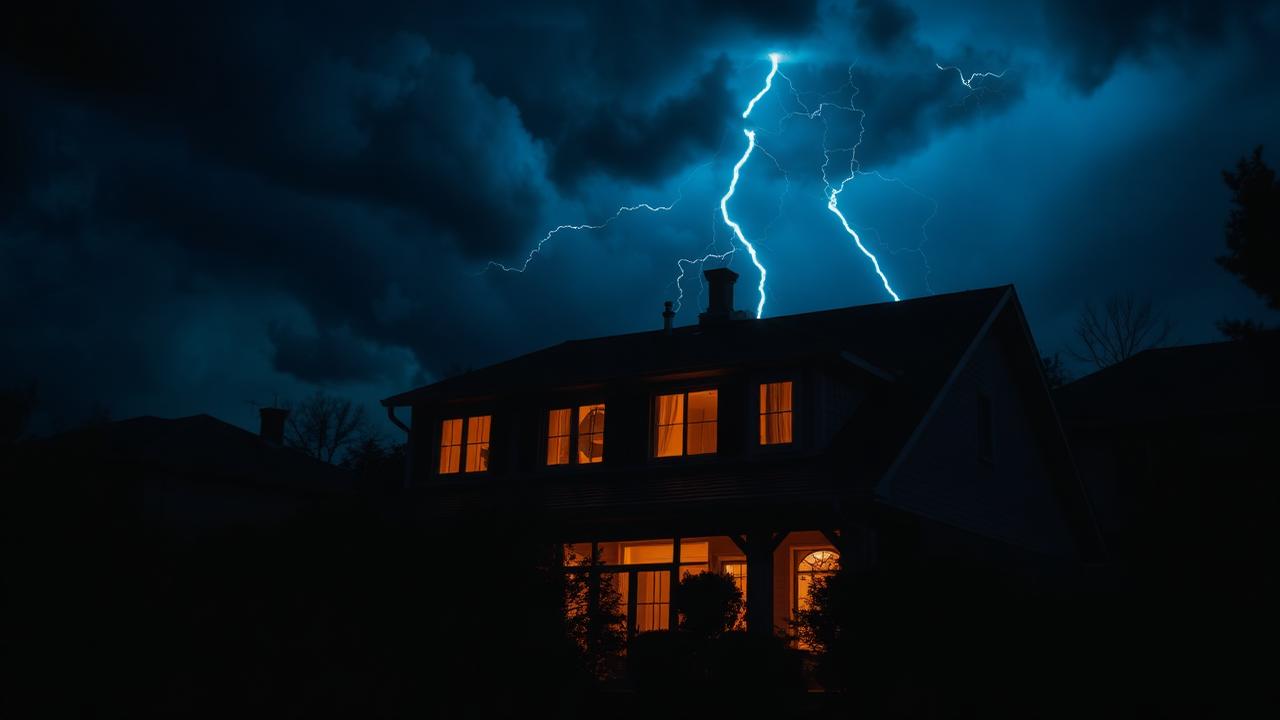
Mississippi storm season begins in late spring and does not cease until well into fall. While most households occupy that time worrying about flooding, roof damage, and staying lit in a power outage, fire preparedness is so often not on the agenda. That is a problem, as storms can generate fire conditions that have nothing to do with the weather — lightning, power surges as electricity comes back on, garages and carports with generators, and families sleeping under covers. All of those, in the absence of anyone waking up, can set a house on fire or fill it with CO fumes.
The homes that appear first are typically not the ones hardest hit by the storm. It’s the ones who didn’t have any plans.
What Storm Season Actually Does to Fire Risk
A lightning strike can travel down through the electrical wires or the roof into the house, causing a smoldering fire to develop inside the walls. At times, these fires smolder for several hours before they break through. When power returns following an outage, the surge can also cause unpredictable loading on outlets and appliances installed in older homes, where the wiring and circuits are typically older.
The issue of using generators is an entirely different one. Carbon monoxide is invisible and has no scent; it accumulates more rapidly than most people think in enclosed or semi-enclosed areas. CO fumes can be forced indoors with the mere crack of a garage door or by placing a generator close to a window, and can reach dangerous levels in just a few minutes. The CDC advises that generators be located at least 20 feet away from any door, window, or vent. That’s a distance that counts, and most people do not observe it.
Building an Escape Plan That Works Under Pressure
Knowing where the front door is is not the same as a fire escape plan. It’s a set of decisions that each person in the house has trained well enough to execute when they’re drowsy, the smoke alarm sounds just before going to sleep, and they are unable to see across the room.
Have two safe ways to get out of each bedroom. Doors stay closed in the rooms where people are sleeping, and fires that occur at night prove lethal precisely there. A closed door slows heat and smoke, but that only helps if the person behind it knows exactly where to head.
Choose an outdoor location where you can meet. Not “the front yard,” but something concrete — a specific tree, the end of the driveway, or a neighbor’s fence post. Ineffective meet-up locations result in people who are already safe going back inside to look for others.
Practice at night, conducting at least one drill per year. Frightened and acting on instinct, children hide in closets or under beds during a fire. Practice makes escape a habit, and a habit takes the place of instinct.
The Detection Problem Most Homes Have
A plan only works if people know there is a fire. This is where a lot of older homes fall short. Many properties built before 2015 rely on a single alarm near the kitchen or in a hallway. An alarm in the kitchen does not reliably wake someone sleeping behind a closed door on the second floor. The same applies to carbon monoxide, which concentrates differently than smoke and will not always trigger a device in another part of the house fast enough to matter.
Wireless interconnection solves this without any rewiring. The X-SENSE SC07-W combo smoke and CO detector links up to 24 units across a home using a dedicated radio frequency. When one unit detects smoke or elevated CO, every connected alarm triggers at once. It runs on a sealed 10-year battery, meets ETL certification under UL 217, and does not require an app, a hub, or a subscription.
For Mississippi homes running generators through storm outages, a combined smoke and carbon monoxide detector covers both threats with one device. During extended outages when a generator may run overnight, that matters.
Before the Season Starts
Check all home alarms. Any older than 10 years must be replaced. If the sensor begins to degrade in an older device, this won’t be apparent from a simple test press, but it does show up in real-world response. The U.S. Fire Administration estimates that over half of all residential fire fatalities occur in households with no working smoke alarm or with alarms that are disconnected.
Go over the plan with all family members during a quiet period. It is imperative it be heard more than once, particularly with children. Mississippi’s storm season comes by in a flash, and the prep window in the lead-up to it is rather brief. That’s exactly the time to slow down and get the basics sorted out.
About X-SENSE Innovations
Founded in 2013, X-SENSE Innovations operates from its registered U.S. address at X-SENSE USA LLC, 1209 Orange St, Wilmington, DE 19801, and specializes in developing certified home fire and safety solutions for both residential and commercial environments. The company focuses on producing professional and user-friendly safety devices, including domestic fire alarms such as smoke, carbon monoxide, and heat alarms, as well as smart home safety systems covering fire protection, intrusion detection, and indoor environment monitoring.
More information is available at www.x-sense.com.
Official company social media profiles: Facebook and Instagram.
Media Detail
Contact Person Name: Farrukh
Company Name: X-Sense
Email: service@x-sense.com
Website: https://www.x-sense.com/
Phone: +1 (833) 952-1880


